


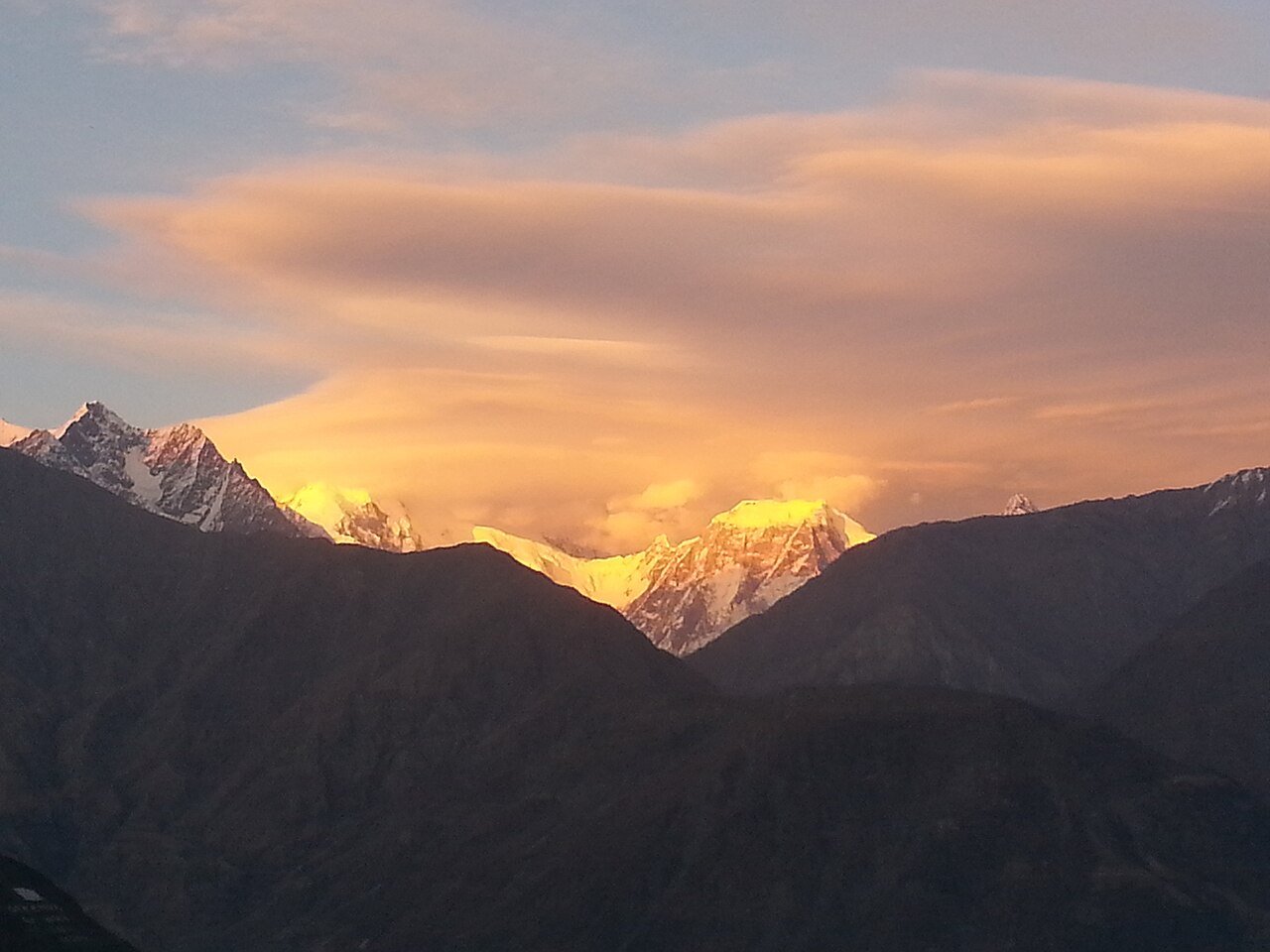
Overview:
With treks to Rakaposhi and Nanga Parbat base camps, experience the stunning scenery of Pakistan’s northern peaks. Both are jewels of the Himalayas and the Karakoram ranges. The moderate trek takes trekkers over lush green valleys, through pine forests, and to Fairy Meadows. Panoramic views of high peaks and glaciers are to be enjoyed along this trail. This is a perfect trek for beginners. It offers an adventure with enough difficulty for an introduction to trekking at such high altitudes. The beauty of nature is endless. Every step, beginning at Rakaposhi Base Camp and ending at the doorstep of Nanga Parbat, is a walk through stunningly pristine landscapes and vibrant mountain cultures. This trek is an ideal introduction to the awe-inspiring beauty of Pakistan’s major mountain ranges, whether you want to enjoy beautiful scenery, tranquillity, or thrill.
Introduction:
Just past ten o’clock in the a.m., the rays from the sun were hitting me harshly and at a degree of only (3,500) meters high. Having just scaled (300) metres to reach the Rakaposhi base camp, I was now using the camp to survey the area for anything and anyone at (3,800) metres towards the summit.
Terribly nothing was around me except for glaciers consisting of (20) metre glacier blocks. It was solitary and quiet except for the sound produced by collapsing ice walls and continuous avalanches.
Rakaposhi, (7,800) m high, is both the tallest and possibly most spectacular mountain found in the Karakoram region; every name can identify the mountain from the Karakoram Highway. The Rakaposhi Mountain is situated within Nagar Valley, the most northern region within all of Pakistan, its name means “shining wall” in their native tongue. Although Rakaposhi is statistically the (27th) tallest mountain on earth, it is regarded as being one of the world’s most stunning.
Visiting the Rakaposhi base camp was definitely one of the highlights of my trip to Pakistan. Not only is it an awe-inspiring destination but it also provided me the opportunity to see parts of the Karakoram mountain range that few have seen before, through my eyes only! Therefore, it is tritely off the beaten path.
Discovery:
Also referred to as Dumani, which means “Mother of Mist” or “Mother of Clouds,” Rakaposhi sits within the Nagar Valley, about 100 km (62) miles from Gilgit City. Rakaposhi’s local nickname translates into English literally as “snow-covered.” As a testament to its splendorous nature and appearance. Although it is the 27th tallest mountain in the world and the 12th highest mountain in Pakistan, it is the sheer natural beauty of Rakaposhi that distinguishes it from all other mountains.
Location:
The Karakoram Mountain range includes one of its most prominent peaks, Rakaposhi, located in the centre of both Northern Pakistan and Nagar District and part of the semi-autonomous region of Pakistan. This majestic peak is also an amazing geographical feature. The Rakaposhi-Harmash Mountains, which Rakaposhi is part of, have to the north the Barpu and Chogo Lungma Glaciers, to the east the Shigar River, to the south the Gilgit and Indus Rivers, and to the west the Hunza River. Eric Shipton described this area as “the most perfect example of mountain grandeur” and called Rakaposhi “the crown of the Hunza Valley,” because it can be seen from many different parts of the Karakoram highway, ranging from Aliabad to Gilgit, where Rakaposhi dominates the skyline. Rakaposhi East, at 7,010 meters, is the highest point in the Rakaposhi massif.
A Historic Ascent:
The tale of Rakaposhi’s climb is a great example of the power of people’s will and resiliency. The first trip to reach the top of Rakaposhi was completed in 1958 by a British-Pakistani team who accomplished a milestone in the history of climbing-by-climbing Rakaposhi via the Southwest Spur/Ridge. Two of the members of the climbing team to reach the summit (or top) were Mike Banks and Tom Patey, who had to climb through really bad conditions and suffered from minor frostbite before they reached the summit of Rakaposhi. During the journey down from the summit, a member of the climbing team died. This loss served as an illustration of how dangerous and difficult it is to try and conquer nature’s mountains.
Ecological significance:
In Nagar region, the ecological value of the Rakaposhi Mountain Range has been identified and established as a community park, thus preserving the natural state and the ecological habitat of endangered animals such as the elusive snow leopard, the great brown bear and the majestic Marco Polo sheep. If you are fortunate, you may see some of these magnificent animals while visiting the community park.
Rakaposhi`s Unique Rise:
One of the most interesting features of Rakaposhi is that it has an incredibly high elevation gain compared with the surrounding landscape; there are very few locations on Earth with this degree of elevation change. Rakaposhi rises 5,900 metres above the level of the Hunza-Nagar River at a distance of just 11.2 kilometres horizontally. This steepness provides stunning views from the Karakoram Highway as you travel on through Nagar, where you can enjoy a panoramic view of Rakaposhi.
Rakaposhi Viewpoint:
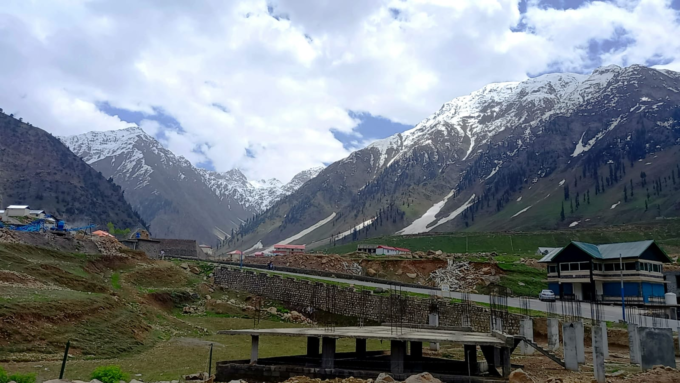
The Rakaposhi viewpoint is known as the “Zero Point” of Rakaposhi. It is the closest place to see Rakaposhi, one of the tallest mountains in the world, and the beautiful natural scenery surrounding it. You will find it located on the Karakoram Highway (KKH) in Guilmet, Nagar Valley. The KKH is a road that connects many amazing places, of which the Rakaposhi viewpoint is one, making it one of the best places for natural beauty to visit within North Pakistan. Many travellers make a stop here when traveling between Gilgit and Hunza villages, as it is an excellent place to relax, take pictures, and enjoy the view. You can relax by the small stream during the summer, dip your feet into the cool stream water, and take pictures of the stunning views of Rakaposhi.
The Rakaposhi viewpoint has been developed to accommodate visitors that have increased significantly over the years. You will find shops, vendors selling local products, snacks, restaurants, campgrounds, and places to stay. A new roadway that takes you closer to the glacier has also been constructed at the Rakaposhi viewpoint. As a result, Rakaposhi could become a significant tourist attraction in the future. Have a Meal at a Place that has a Great View on your way through Gilgit to Hunza! Try Chapshuro, a local specialty, along with many other local dishes at reasonable prices and with friendly service.
Rakaposhi Weather:
Rakaposhi has a much milder climate than that of the Himalayas. It has less of a monsoon influence in July and August because of its location being to the west of the mountain range and can often have a long-standing period of favourable weather conditions throughout summer. Rakaposhi is “The Shining Wall” of Pakistan, as it represents the natural beauty of the region and the dedication of the people who have made this mountain their home. If you are an adventurer and/or love nature, Rakaposhi has something for all types of people. Due to its sheer size and location, it is considered to be one of the most beautiful mountains in the world, so if you plan to go on an adventure anywhere in your lifetime make sure to include Rakaposhi as one of your stops; it truly is a once in a lifetime opportunity.
Food and accommodation:
At both haka pun and Rakaposhi base camp there is a shepherd hut managed by 2 local guys who provide food and camping gear to the few trekkers that travel to Rakaposhi mountain. They supply a tent and a sleeping bag for you to borrow and prepare you 3 wholesome meals daily, which they do so out of genuine love for their guests.
The cost of 3 meals plus the tent and sleeping bag will be $15 per day.
It is the same 2 gentlemen running the same business from both locations, and you will see that they move back and forth between the 2 camps with their donkeys on a regular basis. They informed me that very few people actually trek in the Rakaposhi region so they do not spend the summer months at either camp. I hope that by blogging about this area that I can encourage more trekkers to do this trek. Please check with Hotel Osho Thang first to determine whether or not the men still operate in Rakaposhi; if they don’t, you will need to bring your own camping gear and supplies.
Rakaposhi Base Camp:
Trekking to the base camp of Rakaposhi offers an incredible experience and an amazing opportunity to connect with the mountain and its beautiful surroundings. The standard trek can be completed in just two days; however, those who want to deeply connect to the area have the option of adding on a longer journey by hiking to Diran Base Camp, or beyond.
In addition to the breathtaking views from the base camp of Rakaposhi, the sense of accomplishment that comes from being in nature and reaching your destination provides you with a tremendous feeling of satisfaction. The best time for this trek is mid-May through September; however, the summer months have historically seen some severe weather patterns, and therefore, this particular route has potential for avalanche activity in the summer time.
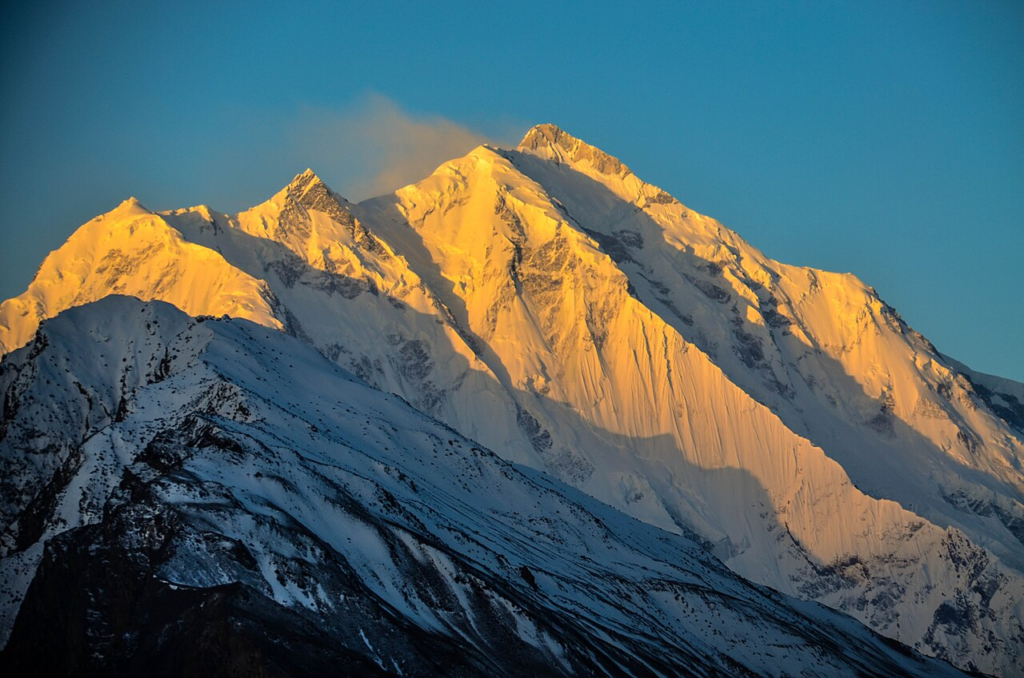
Trekking to Rakaposhi base camp: Itinerary day by day
Should you already be fit, it is possible to do the trek to Rakaposhi base camp in two days. However, to fully appreciate this trek, including Diran base camp and the glacier, I would recommend allowing three or four days to complete it.
Day 1:
Arrival at Islamabad:
Once you arrive at Islamabad International Airport, a Chogori Adventure Pakistan representative will welcome you before transferring you to a centrally located hotel in Islamabad. If you arrive early, we will do an extensive tour of the city’s historic sites including the Grand Faisal Mosque, Pakistan Monument and the local bazaar. Your accommodations will be in a twin-bedded room. Transportation will be by coach or car. All meals will be provided: breakfast, lunch and dinner.
Day 2:
Drive to Chilas:
On the following day, following breakfast, the drive to Chilas will commence via the Karakorum Highway, stopping for lunch at Basham. After lunch we will continue on to Chilas and check into our hotel there.
We will spend the night in Chilas.
The alternative route will take you through the lush green summer pastures of Naran and Babusar Road with an altitude of 4,173 m in the case of travel over Babusar Top.
Day 3:
Trek to Fairy Meadows
After breakfast on the day of departure for Fairy Meadows, we will depart from Raikot Bridge to climb to Tatto village using 4X4 mountain jeeps. The drive to Tatto village will be approximately two hours long, full of excitement. When we reach Tatto village, we will arrange for porters to carry our luggage up to Fairy Meadows; this will take approximately three hours from Tatto to Fairy Meadows – when we arrive at Fairy Meadows, we will check into a hut, rest for a short period, and then take a short walk around Fairy Meadows; we will spend the night in local wooden huts. This will be the most incredible mountain experience of your life; it will be the land of fairies, located across from one of the world’s tallest peaks; among lush green trees and blue turquoise streams of water.
Day 4:
Trek to Nanga Parbat Base Camp:
Altitude: 4,200m.
Today’s trek will take you to Nanga Parbat base camp. After you leave Fairy Meadows, there is another campsite called Beyal that is more scenic than Fairy Meadows. Once you leave Beyal, the terrain will be more difficult but you will also be rewarded for your efforts with some of the best views around. The scenery will change from forest to rocky desert, and you will be surrounded by huge pieces of ice and snow.
After spending the night at the Nanga Parbat Base Camp, it is time to head back to Fairy Meadows, where you will have a chance to journal, draw, paint, or relax as well as photograph the mountain. The sunrises and sunsets in Fairy Meadows are spectacular. It can take 6-8 hours to complete the entire trek.
Day 5:
Drive to Nagar:
Altitude: 2,500 metres
We follow the same route as we did on the way to Fairy Meadows, and will descend gently down to Fairy Meadows, before continuing along this same route to Jhel. From Jhel, we will drive to Raikot Bridge, with a quick stop in Gulmet to view our next trek (Rakaposhi). After enjoying traditional Chai, we then continue our journey to Nagar (Minapin) where we will spend the night.
Day 6:
Trek to Hapakun:
Height: 2800m
Today we embark on our journey starting from Diran Guest House in Minapin Village to Rakaposhi Base Camp. You will be walking a distance of 5.8km, with an elevation gain of 800m. This will take an estimated 3 hours to complete and will provide stunning scenery that will lead you to a beautiful meadow covered in grass in the end. You will have many opportunities to explore, take breaks, and enjoy the beauty of nature on this trip.
Day 7:
Trek to Rakaposhi & Diran Peak Base Camp:
Altitude 4000m
The trek travels on for hours through woodland areas and across fields of pasture until finding a hidden Moraine. Once this moraine is reached, a breathtaking panoramic view opens up of the ridge connecting the peaks of Diran and Rakaposhi. You will camp and sleep at this great location for the evening.
Day 8:
Trek Back to Hunza:
Altitude of 2500 ft
As we return through the same route into Minapin, we will stop at the Rakaposhi viewpoint before continuing down. This is a fairly easy and nice way to get back and allows us to stop for lunch before we proceed to Minapin. For our transportation from Minapin, we will have arranged transport that will take us to Hunza.
Day 9:
Hunza Exploration:
Altitude: 2,500m
Visit Altit Fort, the oldest monument in Gilgit-Baltistan. It was built over 1,100 years ago; at that time, it was the main fort of the Hunza state. After your visit to the Altit Fort, you will also visit the Baltit Fort, a 700-year-old fort and the residence of the ruler of Hunza until the mid-1950s. If you have a focus on food, you may want to take a cooking class for Pakistani Cuisine. Afterward, you may choose to hike behind the fort along an irrigation water channel, which will provide you with views of the valley below, as well as views of the nearby mountains, terraced gardening areas, and the daily lives of the people from Hunza.
Day 10:
Drive and Explore Passu:
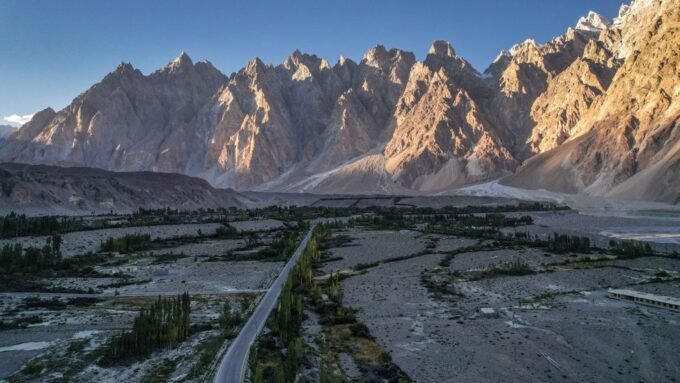
Elevation is 2400 metres Elevation will take you to the “Passu Cones” or Cathedral Ridge which is a series of needle-like pointed (6000 m; 19685 ft) & adjacent to the Karakoram highway there will be an easy trek on the Batura Glacier and you’ll also walk across a suspension bridge to attain the other side to get to Attabad Lake which formed from the landslide that caused the Hunza River to flood and have submerged the village of “Attabad” resulting in about 6000 individuals displaced. You will end up on a ride (boat) in the lake and head back to your hotel room to relax.
Day 11:
Drive to Chilas:
Breakfast at the lake in a relaxed manner before making your way to Chilas via transit. Visit the famous Kargah Buddha a representation of a standing Buddha (carved in the 7th century AD). You will have free time for the remainder of the day to rest or do as you choose.
Day 12:
Drive to Islamabad:
With an altitude of 5.40 m
The journey from Swat’s lush valleys to the busy city of Islamabad has a smooth transition through modern roads, built within an urban environment full of energy. You’ll get to see and experience all different types of scenery and cultural differences along the route, giving you an unforgettable road trip experience.
Day 13:
Departure to Home Country:
Our trekking Pakistan Himalayas is concluded and we will see you off at the Islamabad airport.



Leave a comment