


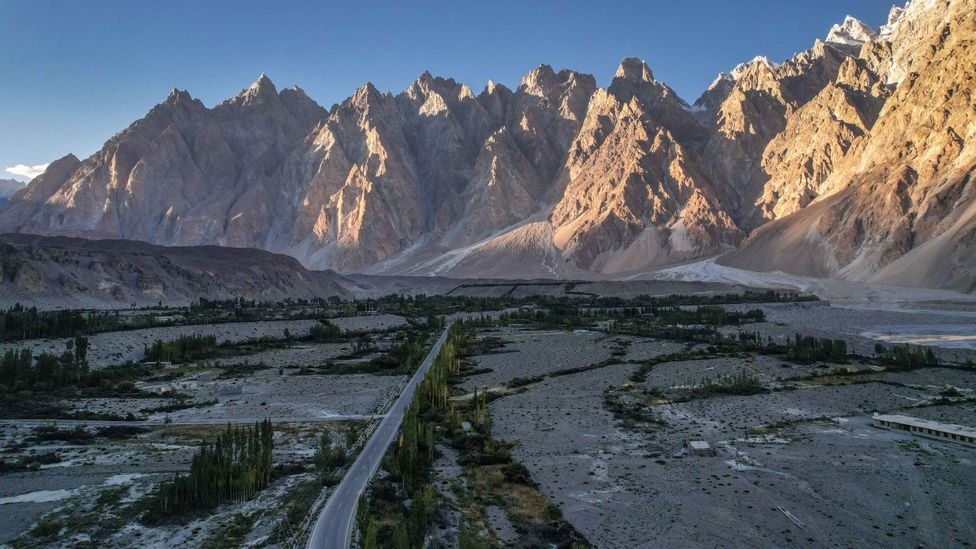
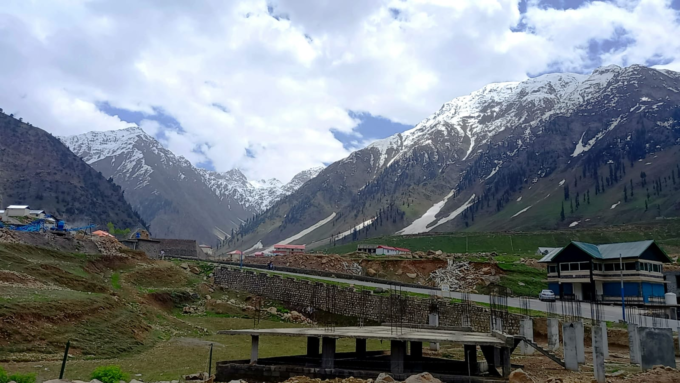
Hunza Valley is located in the northmost part of Pakistan, in the province of Gilgit Baltistan. The valley is a genuinely hidden treasure of Pakistan. The area is bordered by towering, grey, rocky and snow covered peaks. The region is bestowed with lush emerald valleys, flowing glacial rivers, turquoise lakes, rich and diverse cultures and magical landscapes. Every year many tourists, from Pakistan and foreign countries, visit the princely state of Hunza, to behold the ethereal and sublime views.
For me, Hunza Valley is a dreamy travel destination, which I have wanted to visit for a long time. Seeing the stunning pictures of Attabad Lake, Passu Glaciers, Kariamabad Valley, Altit and Baltit Fort, Gojal Valley and Pattundas Meadows, the level of my expectation and excitement is quite high, when I finally planned and booked a tour to enchanting Hunza Valley. The passion to experience the picturesque beauty, vibrant culture, rugged terrain, stoney and wooden houses, apricot and cherry trees, makes it really tough to wait for the day of my departure to the ethereal Hunza valley.
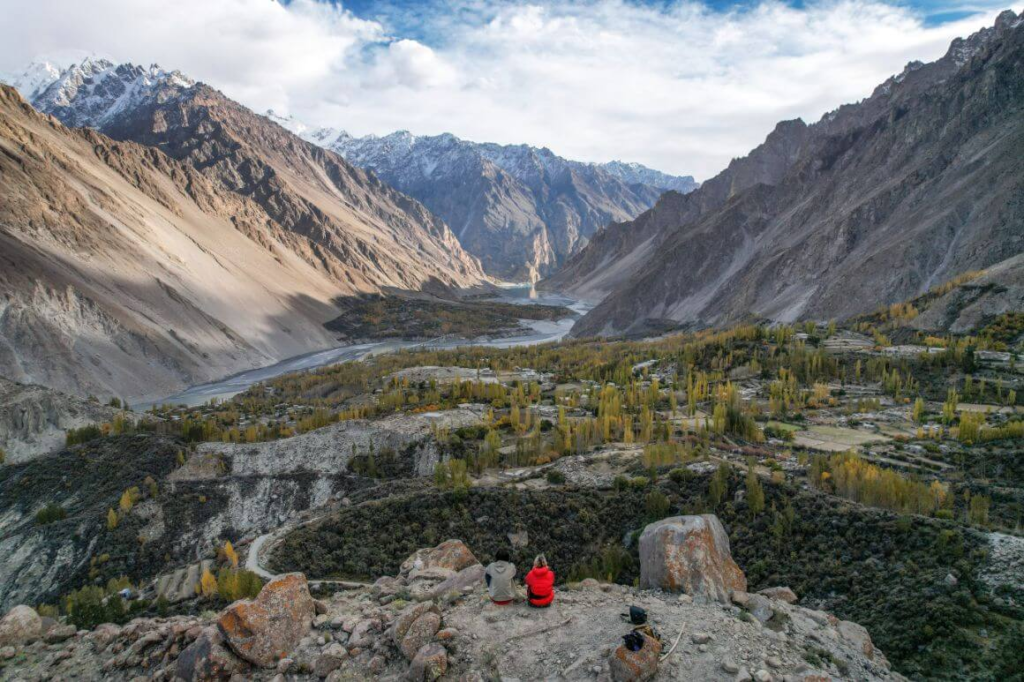
But, as I arrived at the mesmerizing valley of Hunza, and lay my eyes on the breathtaking landscapes, rugged and lofty mountains, roaring rivers, clear glacial lakes and fertile rich valleys, it makes me realize that pictures and videos taken from high definition cameras, cannot capture the ineffable beauty of Hunza.
The Valley is more like a multi-colored palette, which has vivid and vibrant hues of surreal and magical beauty, rough and rocky mountains, green and fertile trees, lively villages, ancient tradition, diverse culture and a sense of purity and simplicity.
In this article, I will try to capture the magnificent experience of visiting Hunza Valley for the first time, and how a journey filled my mind and soul with a sense of peace and tranquility. It is more like carrying a treasure of magically beautiful memories in your mind, and whenever you are alone, you can relive those memories and refresh your heart.
The Road There Is Half the Experience
Many tourists and travellers now prefer a flight to Skardu from Islamabad, to save their travel time. But I am a nature lover and travelholic person, so I decided to choose a road trip, to fully experience the journey. Although the road trip to Hunza from Lahore is quite long and hectic but also justifiable for the lifetime experience it offers.
After doing some research, I came to know that there are two routes to reach Hunza from Islamabad, one is via Naran and second is via Korakarm Highway. Some of my friends, who have already visited the place, suggested that I choose the Naran route, as it is more scenic and beautiful. So I decided to take the Naran route to reach Hunza. The total distance from Islamabad to Hunza via this route is approximately 560 kilometers. The journey typically takes 18 to 20 hours by road, depending on traffic, weather, and road conditions.
My road journey to Hunza was breathtaking, adventurous, tiring and magical. As we crossed Abbottabad, the road was twisting and winding continuously, at some points it gained high altitude and at the other the road steeply descended to lowland valleys. The entire journey, I was gazing at the zigzag rivers, small villages in the heart of lush fertile valleys, herds of goats and cows, fresh icy springs, melting glaciers, waterfalls, pristine lakes and what not.
Being a dweller of Lahore , I am used to plain straight roads, noise, hustle-bustle, pollution, scorching heat, canal road, towering plazas and malls and extremely rushy market areas. For me the road trip to Hunza is an entirely different, unique and stunning experience. The journey is a wholesome experience to experience the ultimate beauty of nature, even before arriving in Hunza.
Small layovers at roadside tea stalls, having tea with spicy and hots pakoras (fritters), observing the lifestyle of the locals living in small villages, gazing to the beautiful roaring zigzag river, experiencing the magnificent mighty mountains, enjoying the hospitality of villagers and roadside stall owners, drinking water from fresh water springs, breathing in fresh mountainous air and absorbing the quiet and tranquil atmosphere, bring utmost and unparalleled pleasure and fill your heart with an exceptional warmth.
First Impressions of Karimabad
Karimabad is one of the most famous places in Hunza and a central point of hotels, restaurants and market. That is why many travellers prefer to stay in Kaimabad. Karimabad also provides easy access to main tourist attractions in Hunza and ample transport facilities.
As I arrived in Kariamabad, I checked in the hotel and did all the arrival formalities. I just stood leisurely on the terrace attached to my room and enjoyed the breathtaking views. The surrounding landscape just spell-bounded me. For several minutes, I was just gazing at the art of nature and contemplating on how meticulously the Creator has created this mystical and marvelous valley. Each detail, which is used to describe beautiful picturesque scenery, is present here in Hunza.
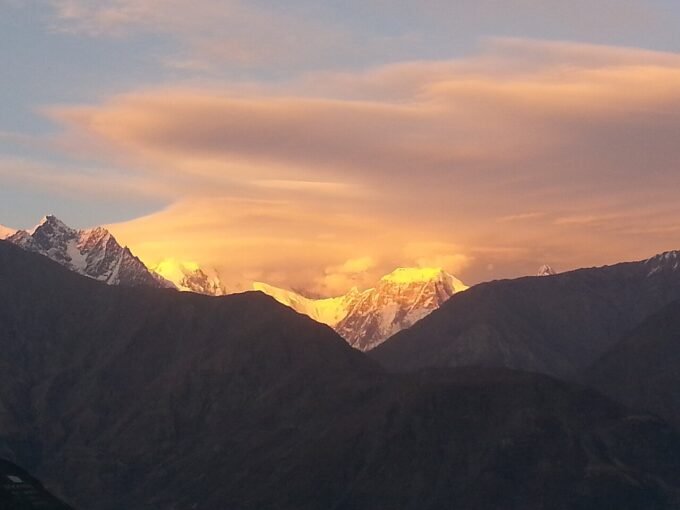
Many grey peaks are visible from my room’s window. Among those peaks, the snow covered peak of mighty Rakhposhi was gleaming with pride and manifesting its lofty presence. Its immense, great and charismatic demeanor nullify the importance and aura of surrounding attractions. During my whole stay in Hunza Valley, sitting at my terrace and watching the awe-inspiring landscape of Hunza and specially the Rakaposhi, was truly a visual delight, which soothes my senses and filled my heart with a certain sense of gratification.
Attabad Lake: Beautiful and Heavy at the Same Time
Attabad Lake can be described as a stunning legacy of a natural disaster. The lake was formed in January 2010, when a massive landslide dammed the Hunza river, engulfed numerous villages and crafted the most breathtaking, vast, deep and turquoise lake in Hunza. Which is also declared as the most beautiful and stunning lake in Pakistan. Many tourists used to stay in the hotel built on the skirt of the lake to enjoy the awe-inspiring views of the lake surrounded by the grey, rugged and towering mountains.
When I visited the magnificent lake during my trip to Hunza, I was just captivated by the mesmerizing presence of the deep blue lake. I simply sat in a nearby restaurant and relished a cup of coffee and enjoyed my lunch, beside the charming Attabad Lake. The sight of its vivid and striking view is strong enough to keep me engaged in the beauty of the lake, for quite a time.
Although the tragedy behind its formation makes you gloomy, it also bestowed the lake with a certain mystical and unearthly vibe. One must feel fascinated by the picturesque and vivid beauty of the lake.
Baltit Fort and the Feeling of Walking Through Time
Baltit Fort was the home of the Ayashkutz royal family of Hunza for 700 years. The fort is constructed intricately in Balti, Kashmiri and Tibetan architectural style. Its wooden balconies, stone walls, elaborate engraved interior and narrow corridors, narrates the story of Hunza’s rich, antique, cultural and strategic significance.
I visited the prehistoric Baltit fort with a local tour guide, who really enhance my experience of roaming around a fort. Although I have also visited an equally ancient and important fort in Lahore as well. But the way my tour guide described the chronicles attached with the glory of the fort, folk and forgotten tales regarding its downfall in the British-colonial era, while roaming around the random sections of the fort, truly drew a rough sketch of ancient times, in front of my eyes. Moreover the stunning surrounding views and chilled fresh breeze further elevated the experience.
Now the fort is a UNESCO World Heritage site. Every year many national and international travellers visit the place to experience the rich ancient heritage of the region and enjoy the stunning views from the narrow wooden windows of the fort.
The People Left the Deepest Impression
Besides its amazing views and dazzling landscape, Hunza has much more to offer for its visitors. Here I am talking about the inhabitants of this naturally blessed valley. The locals of this region are also as beautiful, raw and pure as the valley itself. Hospitality, generosity, warmth, cordiality and genuineness, are common traits in natives of Hunza. For urban people, these traits are rare and generally offered to someone close and special. But in Hunza, I experienced the locals showering their hospitality on each tourist and traveller, without any discrepancy.
I stayed in a local guesthouse, where the owners were also living nearby. They hosted me in a wholesome way that I felt really comfortable and at home, in an alien and unknown area. They offered me tea, and allowed me to enter their private living space and kitchen to observe their ways of life and cooking techniques.
When I visited the small local market in Karimabad, the shopkeepers were quite polite and welcoming. A shopkeeper presented me with their traditional qehwa. Every local treats you well and enriches your visit by their small cultural stories and tales. During a random walk across the remote villages of Hunza, local villagers offered me fresh and chilled spring water in a glass which really quenched my thirst. I also took permission and visited these remote, untouched and rustic villages. Walking leisurely through the village, interacting with innocent and lively kids playing around the alleys, chatting with the ladies about their life routine and skills, enjoying elicious homegrown apricots and walnuts and learning a lot through their simple, serene and contented life, was a unique walk to remember.
The Food Was Simpler Than I Expected — and More Memorable
Before visiting Hunza, I visited Naran, Kaghan and Murree for the vacation on hills. The food in those hill stations was not up to the mark, and almost the same as we get in Lahore. When I decided to visit Hunza Valley, I was looking forward to amazing landscape and scenic views but I was not expecting that Hunza is so rich and exceptional in its authentic cultural cuisines.
The guesthouse owner suggested me to have Chapshuro as my first meal in Hunza. Its soft and crunchy texture and tantalizing flavours really astonished my taste buds. At night I relished the bowl of Dawdo, a warm noodle soup, which is the best comforting and filling meal and really compliments the freezy and cold nights of Hunza. Moreover, I already tried dumplings in Lahore from many Chinese and Japanese restaurants,but the delectable taste of Balti dumplings I got from a small Mamtu stall in Karimabad, were robust in its authentic flavours. Besides this, homemade apricot jams and pastries were really a regional delicacy and a must to try things in Hunza.
The significant characteristic of traditional cuisines in Hunza is its simplicity. Although I tried many authentic cuisines in my seven day trip, Chapshuro, Dawdo, Kebabs, Karahi, Pulao and what not, every dish is made with very few spices which enhances the natural flavours of core ingredients. Moreover the meals are usually cooked on low flame with ancient techniques and authentic recepies. All these factors are involved in bringing rich, simple and rare flavours in the food.
Altitude Is Real — and Worth Taking Seriously
Usually visitors arrive in Hunza well prepared for harsh cold weather, powerbanks and medicines. But they are less aware about the problem caused by high altitude. Same was the case with me, as I had no idea about altitude sickness like headaches, nausea, and dizziness.
On my first day in Hunza, I was feeling fatigued and dizzy. Initially I thought that maybe I am tired due to a long and hectic travel, but my condition didn’t get better after taking a nap. My guesthouse owner’s wife instantly recognized that it was due to altitude sickness, after hearing my symptoms. She suggested that I keep myself hydrated, eat something light and being less active could make me feel better. I strictly followed her directions and did not go for hectic and tough hikes but try to enjoy the surrounding and easily accessible areas. After two to three days, I was feeling normal, energetic and active.’
So whenever you get a chance to visit Hunza, do not plan a rushy and busy trip. Instead of this give your body a time to adapt to the sudden change in altitude and atmosphere. In short, try to plan a trip in which you have more relaxed and leisure time instead of rushing from on tourist attraction to the other.
The Night Sky Was Something I Had Forgotten Was Possible
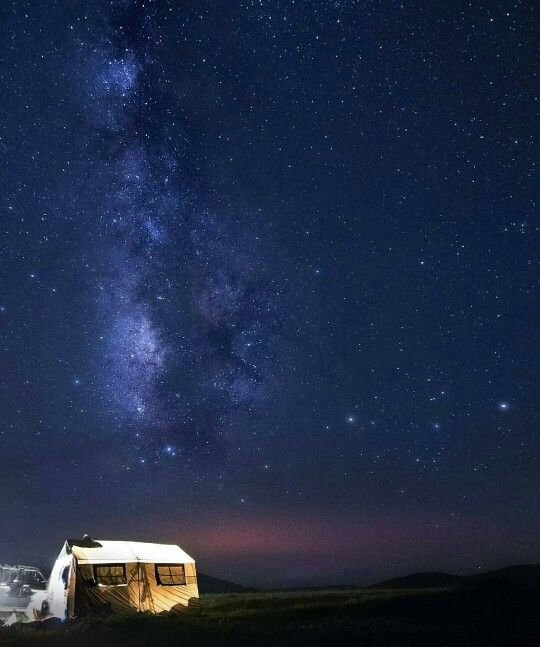
In my initial two days of the trip, I didn’t bother to sit under the sky at late night timings because despite the summer season the nights were pretty cold. But on the third night, I decided to take a cup of traditional salty yak milk tea, in the open garden area of the guesthouse. Sipping the hot and steaming tea I randomly lays my eyes on the clear night sky and forgot to take my eyes off for several minutes. The sight of hundreds of sparkling stars in the clear and pollution free sky of Hunza is looking like a black canvas decorated with hundreds of tiny shimmery stones and crystals.
As a resident of Lahore, I used to think that now stars are no longer visible or maybe they have lost their sparkle with the passage of time. But the sky in Hunza is flaunting countless tiny twinkling stars studded intricately in the deep blue sky.
I sat there for longer and kept staring at the sky. The beautiful horizon and soft, tranquil and soundless atmosphere kept me astonished. It was one of the most peaceful moments of the entire trip.
A Few Things No One Warned Me About
Even though the Hunza Valley is unparalleled and incomparable in its breathtaking and awe-inspiring views. But the region is also rough and rugged. The steep elevations, rocky mountains, harsh and unpredictable weather, narrow roads, tricky turns, power shortages, unreliable internet, flash flooding and landsliding, are the true challenges in the region.
You cannot predict a safe and sound trip, because here nature is beautiful but also cruel and cunning at the same time. Anytime you could be struck by some emergency landslide, road blockage, torrential rains, storms. It’s better to plan a trip prepared for all kinds of circumstances. Do not panic is the first and foremost key to handle such sudden situations.
Thanks to the Almighty that I was lucky enough to have a safe and sound trip, although I came across a landslide but it didn’t block the road. Regarding the power outrages and limited internet connectivity, these things make little instructions during your stay but not any major problem. As roaming around the valley engaged in the scenic views, one would not bother about electricity and internet.
What Responsible Travel Actually Looks Like Here
The northern areas and its stunning valleys provide us a gateway to escape from our daily busy and boring work routines and to breath in the fresh and serene air of northern areas. So it is our duty to keep these places as clean, pure and beautiful as they were before the excessive tourism.
For example, many famous tourist attractions are soiled by food wastage, plastic bags, emptied bottles and cannes and disposable utensils. So whenever you go to these areas, behave like a responsible citizen and always carry a shopping bag to put the wastage and then discard it at proper garbage bins.
Secondly, as the tourism industry is progressing day by day. Now many big stakeholders and businessmen launched their restaurants, hotels and transport services in the region. But staying in such hotels does not benefit the locals of the valley. Try to stay in local hotels and guesthouses, eat at local restaurants, shop from small local markets instead of big marts. By taking these steps, they money spent on tourism will benefit the natives of Hunza and bring prosperity and progress in the regions.
What I Came Home With
When I reached Hunza, I thought of having some lasting memories of the stunning and marvelous views and landscape, but as I spent my time there, I started enjoying the place from an entirely different point of view.
I came with a plan of covering all around attractions and having a packed and tiring trip schedule but I started enjoying the peace, calm and serenity of the region. I just did not want to rush to the nearby tourist attractions ather I used to sit leisurely on a place, enjoy the rustic and raw surrounding landscape, had a leisure walk around the city, observe the small and daily life rituals and routines of locals, interacting with them on trivial topics, gave me an inner peace and pleasure and also filled my heart.
The people of Hunza have limited resources, less luxuries, scarcity of supplies but are really content, happy and satisfied with their life. They celebrate their rustic and raw traditions, their eyes are full of life and their routine is full of vibrant colors. These observations taught me that how can we find happiness in our own belongings and possessions if we stay content and satisfied with what we have and do not run behind the endless desires.
If you are planning your first trip: go. See Attabad Lake and Baltit Fort. Walk up toward Rakaposhi’s base. Watch the sunset from Duikar. Take your photos. But also sit down somewhere without an agenda. Let the mountains be large. Drink tea with a stranger. Look up at the sky at night.
Hunza is not just a destination. It is the kind of place that gets into you and stays there long after you have gone home.




Leave a comment