


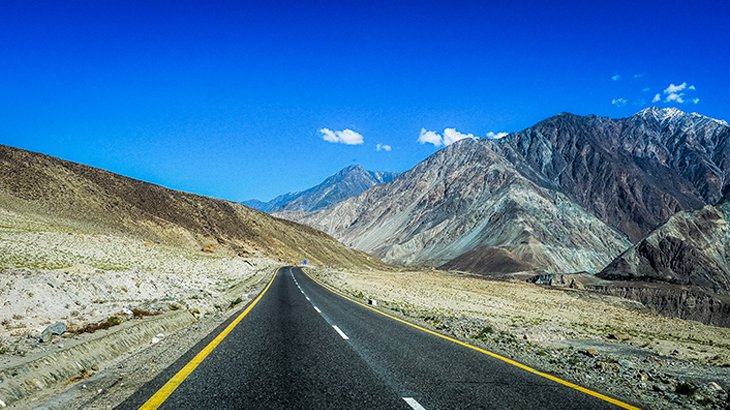
The Karakoram Highway, formally known as the China-Pakistan Friendship Highway, is a 1,300km road which links Hasan Abdal (located a few kilometers beyond Islamabad, the capital of Pakistan) with Kashgar, the second most important city in Xinjiang province, China. The road was completed in 1979 and opened to the public in 1985. The road was once an important ”Silk Road” route which used to link the Indian sub-continent with China, is today considered the 8th wonder of the world, since the altitude and the hard conditions in which it was built made it become an architectural masterpiece.
Therefore, the Karakoram Highway attracts travelers from all over the world for decades, not only because it is the highest paved road in the world (4,800m at Khunjerab Pass, last point of KKH in Pakistan) but also because it goes through the three greatest mountain ranges on Earth: the Himalayas, the Karakoram and the Hindu Kush. The Karakoram Highway is, perhaps, one of the only places in the world where you can admire a mountain 8,000 meters high, like Nanga Parbat, from the window of your car.
A drive through The Korakaram Highway is more like a picturesque account of panoramic peaks, pristine glaciers, heavenly lakes, ethereal meadows, spectacular valleys and roaring rivers. With all its beauty along with risk and danger, the drive is a lifetime experience both for the drivers and the passengers. Moreover, the road is a two-way all weather road in Pakistan, except the Khunjerab Pass, which is closed from January to April.
For travelers planning a Karakoram Highway road trip in 2026, slowing down and exploring these overlooked stops can completely change the journey. Instead of rushing from Islamabad to Hunza in a single drive, taking time to explore hidden viewpoints and lesser-known valleys makes the road trip feel richer and more personal.
This guide focuses on the most beautiful stops along the Karakoram Highway that many tourists skip, even though they are often the most rewarding parts of the journey.
Why the Karakoram Highway is One of the World’s Greatest Road Trips
KKH: The Highway in the Clouds, built on the historical Silk Road, which was an important ancient trade route, used by merchants, traders, explorers and pilgrims to exchange goods and culture between China, Central Asia, India, Persia and the Mediterranean.
The Highway ended the centuries-old isolation of many remote communities and villages on high altitudes. It was the biggest work project since Pyramids. Expert road building surveyors had reported over the years that this was a road which could not be built. But thousands of workers worked for twenty long years to complete this 1200 kilometers two-lane road from Kashgar, China to Hasan Abdal, Pakistan. They are the real heroes of the Highway in the Clouds and many of them did not live to see the marvel project.
On the other hand, its scenic beauty makes it more eminent. As it’s not just a transportation route but also a corridor through breathtaking landscape and lofty mountains. One more fact, which makes it more popular, is that it’s one of the most dangerous roads in the world. Its potential steep falls, unprotected road edge, unstable mountains and constant fear of landslides makes it a famous and popular destination among the adventure loving explorers of the world.
Furthermore, the ride through KKH(Karakuram Highway) is also a manifestation of variation of the landscape and terrain, from Hassan Abdal to Khunjerab Pass. It shows how a road connects numerous villages, many cities, several towns, and thousands of people belonging from different cultures, ethnicities and religions. The highway depicts the beauty of Pakistan’s diverse and dramatic terrain, culture, and people.
All above mentioned factors make the KKH one of the world’s greatest trips. The highway’s grandeur, history, diversity, elevation, high altitude, narrow turns, breathtaking landscape, and life threatening steep trenches, transform the trip into an unforgettable experience, in which journey matters far more than the stops, town, cities, valleys and lakes.
Haripur and Abbottabad – The Beginning Most People Rush Through
The KKH officially starts from Hassan Abdal in Punjab province. But from Haripur and Abbottabad, the road starts gaining a pleasant elevation. The air began to feel colder and scenery became delight with the view of mountains covered in lush green grass and trees.
Starting an early morning road expedition of KKH, and enjoy a fulfilling breakfast of hot, crispy and golden paratha with fluffy and spicy omelet with a cup of steaming karak chai, from a roadside dhaba on the outskirts of city, would really give you a delicious and filling start of a long and tiring day of riding through the highway.
Why Stop Here?
- Relaxed beginning before long mountain drives
- Cooler weather compared to major cities
- Beautiful monsoon greenery
- Great roadside breakfast spots
Khanpur Lake – A Hidden Detour Worth Taking
The lake is located on the Haro River in the Khanpur Tehsil, Haripur District of Khyber Pakhtunkhwa amidst majestic hills and lush greenery. This picturesque lake provides a perfect setting for scenic detours while driving through KKH.
Why Tourists Skip It
- People rush directly toward Hunza or Naran
- Seen more as a local tourist spot
Why You Shouldn’t
- Beautiful turquoise water views
- Calm roadside stop during long drives
- Great photography location before entering mountain terrain
Besham – More Than Just a Night Stop
Besham is a city in the Shangla District of Khyber Pakhtunkhwa, Pakistan. Located on the right bank of the Indus River. Besham serves as a major junction on the Karakoram Highway that connects Khyber Pakhtunkhwa and Punjab with Gilgit-Baltistan.
Besham’s shops, restaurants and hotels remained open 24 hours a day due to its geographic position, as it is on the famous Karakuram Highway, which connects Pakistan with China. And many tourists heading to Skardu and Hunza stay here for the night. Due to this reason Besham’s market is quite active and crowded.
But Besham’s landscape;
- Lush green hills
- Flowing Indus river
- Stupas and Buddha figures on boulders
- Shatial rock carvings and petroglyphs of ibex
- Shishper Glacier, the largest glacier in the region.
Shows that it is not just a transit or a night stop for tourists and merchants heading towards GB but a city having serene, scenic and rich historical sights and also attractive and captivating for tourists. .
Hidden Experience
- Riverside evening walks
- Quiet mountain scenery
- Traditional roadside restaurants serving local food
Diamer Region – The Overlooked Face of the Karakoram
District Diamer is the gateway to Gilgit-Baltistan. The biggest power generation project of the country, the Diamer-Bhasha Dam adds to the economic importance of the region.
The area manifests prehistoric traces of human species and advancement in the shape of rock carvings, rock inscriptions and petroglyphs etc. These features make Diamer district an important destination with over 35000 prehistoric inscriptions and carvings.
Diamer is home to some of the most dramatic and unspoiled landscapes in the world. The region invites you to explore its awe-inspiring beauty, from towering peaks to lush valleys, and discover the warmth of its local hospitality. Beside other numerous attractions Dimaer is also a land of mighty and magnificent Nanga Parbat, which stands like a crown among other peaks in the region.
Beautiful Hidden Stops
- Small river viewpoints
- Ancient rock carvings
- Quiet roadside villages beneath massive cliffs
This region feels less polished and more rugged, which is exactly what makes it memorable.
Chilas – A Place Most Tourists Misunderstand
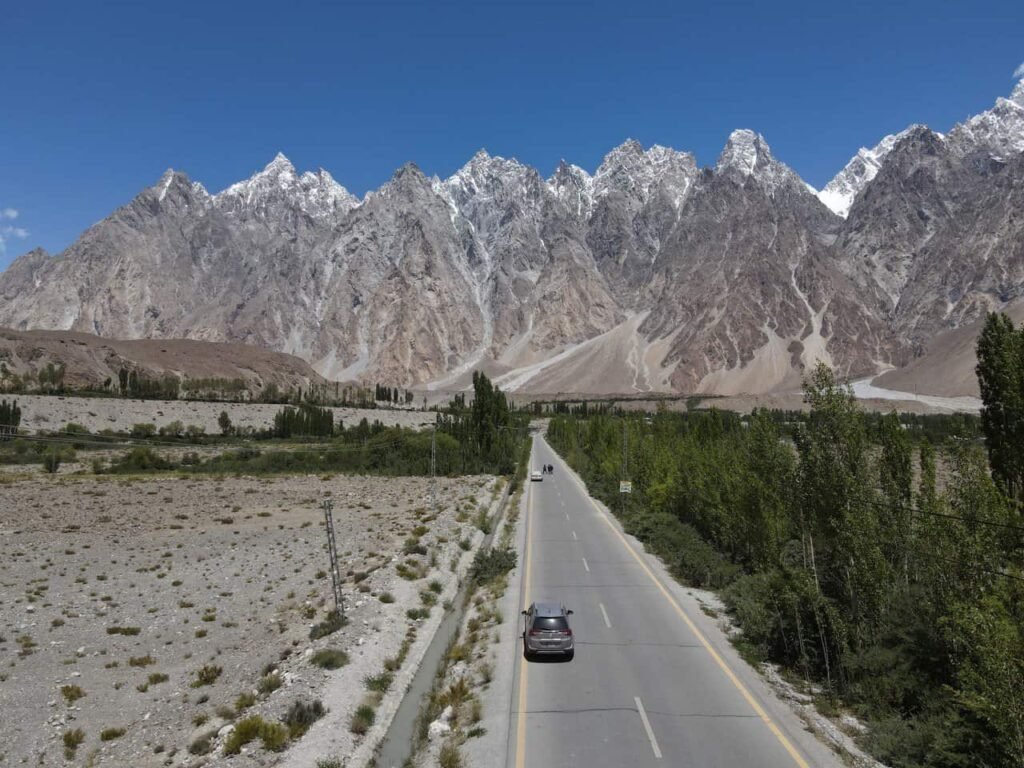
City of Chilas situated in the District Diamer of Gilgit–Baltistan. It is the divisional capital of the Diamer-Astore Division along the Indus River. The city was once an important trading centre, and it was also home to a number of Buddhist monasteries. The ruins of these monasteries can still be seen today, and they provide a fascinating glimpse into its past .
Chilas is blessed with awe-inspiring natural beauty, boasting towering mountains, crystal-clear rivers, and verdant valleys. From the majestic peaks of Nanga Parbat, to the tranquil shores of the Indus River, nature enthusiasts will find themselves immersed in a playground of outdoor adventure.
Many tourists do not stay in Chilas and rush to other destinations. But its rich historical and archeological sites, its stark and barren mountains, prehistoric Indus River, are the evidence which prove Chilas as a misunderstood region. The region demands a complete trip to dive in the rich history and striking landscape.
Why It’s Worth Exploring
- Powerful mountain scenery
- Less tourist crowd
- Access to viewpoints near Nanga Parbat region
- Authentic roadside atmosphere
Chilas may not be conventionally “pretty,” but it has a raw beauty many travelers begin to appreciate after spending time there.
Raikot Bridge – The Gateway To Nanga Parbat
Raikot Bridge is a road bridge situated on the Karakoram Highway (KKH), spanning the River Indus. It is the gateway to Nanga Parbat base camp. Tourists can hire jeeps from the bridge and follow an unmetalled track to Tattu Village, a journey which takes around 90 minutes. A further three-hour hike takes one to the Fairy Meadows National Park.
A small junction village is located around the bridge. It houses a few hotels, several small shops and restaurants, and a mosque.
It is situated in a remote area, and the surrounding terrain is rugged and mountainous, with cliffs and deep gorges. It runs across the Indus River.
Hidden Beauty
- Massive mountain backdrops
- River photography spots
- Local roadside chai hotels with incredible views
Even a short stop here feels memorable.
Junction Point of Three Mountain Ranges
Beholding the Three Mountain Junctions at KKH, is like watching nature’s grandest marvel, with naked eyes. The awe-inspiring location near Jaglot, marks the only place on Earth where three of the world’s mightiest mountains ranges; the Himaliyas, Karakoram and Hindukash, meets. The towering mountain, roaring river and crisp mountain air, captivates you.
This marvelous point of Jaglot is also a meeting point of two major rivers; Indus River and Gilgit River, increasing the uniqueness of the area. But still Jaglot is unfamiliar to many Pakistani tourists. Although it attracts many adventure seekers and mountaineers from around the world.
Why It Matters
- One of the rarest geological viewpoints in the world
- Stunning Indus River scenery
- Great short stop for photography
This is one of those places that feels more impressive once you understand what you are looking at.
Gilgit – More Than a Transit City
District Gilgit, capital of Gilgit-Baltistan, is strategically the most important territory in the Karakorum Range as it has been the trade center of the area for centuries. The city also has an airport and hence is easily accessible.
Nestled on the confluence of Hunza River and Gilgit River, surrounded by majestic peaks of the Karakoram and Hindukush ranges, Gilgit is a prime destination for tourists seeking natural beauty, cultural richness, and historical depth. It is often considered the gateway to many of the region’s famed valleys, including Hunza, Ghizer, Skardu, and Astore, making it an essential hub for adventure tourism in northern Pakistan.
Its bustly markets, delicious food, river bank, surrounding gigantic mountains and rich cultural and historical sites, emphasize on its position as just more than just a transit.
Lesser-Known Experiences
- Evening walks near the river
- Local food streets
- Traditional markets away from tourist zones
Gilgit also provides a more local and urban side of Northern Pakistan compared to resort-focused tourist valleys.
Nomal Valley – The Hidden Green Escape
Nomal Valley .a hidden gem of Gilgit-Baltistan, surrounded by majestic mountains and nourished by the crystal-clear waters of the Hunza River. The valley shines with its green fields, untouched landscape and tranquil Hunza River.
The valley is still less explored and less crowded and offers a peaceful and serene experience.
Why It’s Special
- Fewer tourists
- Traditional village atmosphere
- Relaxing scenery before entering Hunza
For travelers wanting a slower road trip experience, Nomal Valley is a perfect hidden stop.
Rakaposhi Viewpoint – The Stop People Rush Past
Rakaposhi, meaning “Shining Wall” or Dumani, meaning “Mother of Mist” in Burushaski, is a prominent mountain in the Karakoram range, located in District Nagar of Gilgit-Baltistan.
Rakaposhi View Point, also known as the “Zero Point of Rakaposhi,” offers the closest view of the stunning Rakaposhi mountain and its surrounding natural beauty. Located on the Karakoram Highway (KKH) in Ghulmet village, Nagar Valley, it is a popular stop for travelers between Gilgit and Hunza.
With a striking and mesmerizing view of Rakaposhi, the pristine view of glacial streams, the Rakaposhi viewpoint demands one to just sit and gaze at the marvel of nature, absorb its enormous and spell bounding beauty and enjoy a cup of tea.
Hidden Experience
- Early morning tea with mountain views
- Watching clouds move across the glacier
- Quiet roadside photography at sunrise
This stop deserves more than five minutes.
Hopper Valley – The Glacier Valley
● Hoper Valley, situated in Nagar Valley district of Hunza Nagar. The entire valley is enveloped by the large and expanded Hoper Glacier on all three of its sides. Hopper Valley consists of a group of villages within a natural bowl formation along a bend of the Baltoro Glacier.
The valley has a number of natural formations, including glaciers, lakes, and high mountains.
● Geentur or Supulter glacier.
- Rush Lake
Why Visit?
- Easy glacier viewpoints
- Traditional mountain villages
- Fewer crowds compared to central Hunza
The valley feels peaceful and authentic compared to heavily commercialized destinations.
Ghulkin Village – The Quiet Side of Upper Hunza
Surrounded by the breathtaking beauty of Karakorum mountains, the settlement of Ghulkin is an ideal destination for adventure and nature lovers. Because of its picturesque landscape and peaceful atmosphere, the natives call it Jannat Ghulkin. . This place is blessed with numerous lofty peaks, glaciers, a lake, gushing glacier fed streams, fruit orchids and green fields.
The stunning landscape, pleasant weather and rich culture, makes Gulkin a place which demands a longer and relaxed stay of 1 or 2 day, during the trip to KKH
What Makes It Special
- Less crowded atmosphere
- Beautiful local guesthouses
- Easy walking trails and bridge crossings
Ghulkin feels slower, calmer, and more personal than many mainstream tourist spots.
Hussaini Suspension Bridge – More Than Just a Social Media Spot
Hussaini Suspension Bridge, spanning the Hunza River in Upper Hunza, is one of the world’s most dangerous bridges, stretching 660 feet (194 meters) with 472 wooden planks spaced widely apart, hanging 50-100 feet above the raging river.
It connects Hussaini village to Zarabad hamlet, serving as a vital lifeline for agricultural transport while attracting thrill-seekers for its precarious design and stunning Karakoram backdrop. Known for its swaying cables, missing planks, and lack of safety measures, it’s a test of courage, though recent maintenance has improved stability. Environmental concerns like littering and over-tourism threaten its pristine setting, but the bridge’s raw engineering and views of Passu Cones make it a must-visit for adventurers.
Its unique, ancient and rustic characteristic, and the breathtaking view of Karakuram mountains, and flowing river, draw tourists close to nature, to the region and to the hard and raw life of locals. The suspension bridge is not just a social media spot but a landmark of the region.
Why It’s Worth More Time
- Incredible river landscapes
- Authentic village environment
- Great walking experience near Passu
Passu Glacier Viewpoints – Often Overlooked
Although Passu cones are one of the most breathtaking sights, and a landmark of KKH. But Passu Glacier is more beautiful and a must to behold beauty on Karakuram Highway. Passu is one of those few glaciers along Karakoram Highway (KKH) that are very clearly visible from the road.
Right in front of the snout, KKH takes a turn and provides a brilliant view of the ascending glacier. One can take very good photos right from the road and if one climbs for 15-20 minutes on the nearby hills, excellent views of the glacier are available. On a clear day, one can also get a very good view of 24970 ft high Shispare Sar and 24534 ft Passu Peak. It’s an excellent stop over while riding through KKH, to experience the gigantic and dramatic peaks and landscape around KKH.
Best Experience
- Short glacier walks
- Sunrise photography
- Quiet evening views without crowds
Khunjerab Pass – Don’t Rush the Final Stretch
Khunjerab Pass is the last point of KKH in Pakistan, and also the highest paved international border in the world. The pass is also known as “The Roof of the World” due to its high altitude.
One of the most compelling reasons to visit Khunjerab Pass is its pristine natural beauty. The pass offers a panoramic view of rugged mountains, lush meadows, and crystal-clear streams. Snow-capped peaks, including the formidable Muztagh Ata, add to the dramatic scenery.
Many travelers focus only on reaching the border sign, but the surrounding landscapes are just as spectacular.
Hidden Stops Along the Way
- Small streams and wetlands
- Wildlife sightings
- Empty mountain plains with snow-covered peaks
The journey itself matters more than the final checkpoint.
Best Time for a Karakoram Highway Road Trip
Ideal Months
- May to October
Best for Green Landscapes
- July and August
Best for Clear Mountain Views
- September and October
Travelers should avoid heavy winter snowfall unless experienced in mountain driving.
Important Road Trip Tips
- Start drives early in the morning
- Keep extra fuel in remote regions
- Download offline maps
- Carry cash for small roadside shops
- Avoid driving late at night in mountain areas
- Keep warm clothing even during summer
- Take breaks often to avoid altitude fatigue
Final Thoughts
The Karakoram Highway is not a journey that should be rushed but it’s a journey which should be enjoyed and cherished. Some of the most memorable moments happen in the places travelers least expect like a quiet riverside village, a roadside chai stop beneath giant mountains, or a hidden valley skipped by most tourist itineraries. These are sights which give you a most raw and pure experience of local culture, terrain and lifestyle. While famous destinations like Hunza and Khunjerab deserve their popularity.
For travelers planning a 2026 road trip through Northern Pakistan, the best approach is simple: drive slower, stop more often, and allow the Karakoram Highway to unfold gradually. The real beauty of this journey is not only in the famous landmarks, but in the hidden places between them.


Leave a comment